16 July
The Mysterious Affair at StylesMonday, 16 July, is both a busy wartime day at Styles and a pivotal date in the case against Alfred Inglethorp. The household’s charitable obligations and routines fill its hours, but the date later acquires a sharper significance when the reported purchase of strychnine is placed on that Monday and Hercule Poirot challenges the apparent case against Alfred as an implausible trap.
A Household Shaped by Wartime Economy
Mrs. Inglethorp presents the house as a “war household,” where nothing is wasted. She explains that the family has given up late dinner and saves even waste paper, which is collected in sacks. This policy is more than domestic background: Poirot later connects it to the difficulty of disposing of a thick document, such as a will, without attracting notice.
The reduced household staff reflects the same wartime strain. Dorcas recalls that Styles once employed five gardeners, but now has only three: Manning, William, and a woman gardener. Her contrast between the former estate and its present staffing makes clear how the war has altered everyday labor as well as household consumption.
The Day’s Routine and Unease
The 16th falls on a Monday, and the household is occupied with preparations for a charity entertainment. The bazaar has taken place on Saturday; that evening, Mrs. Inglethorp is due to recite a war poem. The family spends the morning arranging and decorating the village hall, takes a late luncheon, and rests in the garden during the afternoon.
Against this ordinary schedule, John Cavendish’s manner stands out. He seems unusually excited and restless. After tea, Mrs. Inglethorp goes to lie down before the evening’s effort, while the narrator plays tennis with Mary Cavendish. At about a quarter to seven, Mrs. Inglethorp calls attention to the early supper; the household hurries to get ready, and a motor is waiting at the door before the meal is over.
The Hospital Visit
A later visit to Cynthia at the dispensary in Tadminster shows another wartime setting. The hospital porter initially detains the visitors because they are under suspicion; Cynthia appears to vouch for them, wearing a long white overall, and takes them to her room. There she introduces her fellow dispenser, whom she calls “Nibs.” The dispensary, with its bottles and controlled access, brings the household’s social world into contact with professional medical work.
The Date as Evidence
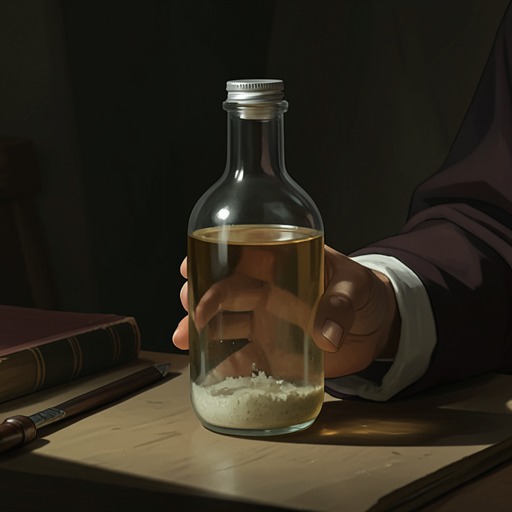
The date is explicitly checked in questioning: when asked when the relevant event occurred, the answer is “Last Monday night,” and the follow-up establishes that this means Monday, the 16th, rather than Tuesday. In Poirot’s later reasoning, the claimed purchase of strychnine on that date is central to the apparent case against Alfred Inglethorp.
Poirot argues that a man who deliberately planned to poison his wife would not sensibly buy strychnine under his own name, offer a story about a dog that could be disproved, wait to use the poison until after a conspicuous quarrel, and make no effort to establish an alibi. The combination of the purchase and the surrounding circumstances, he insists, is too foolish to fit a calculating criminal. In his reading, the evidence has been arranged so conspicuously that it is more likely to implicate Alfred falsely than to establish his guilt.
The Fire and the Missing Document
The date also belongs to the sequence in which the household’s wartime economy becomes a clue. Poirot recalls that, on one of the hottest days of the year, Mrs. Inglethorp ordered a fire in her room. The temperature was 80 degrees in the shade, making the fire an anomaly; because waste paper was not discarded at Styles, Poirot reasons that an important document could not easily be destroyed by ordinary means. He therefore suspected that the fire was intended to destroy a document, possibly a will, and was not surprised by the charred fragment found in the grate.
Poirot admits that he initially drew the wrong conclusion about the timing of the quarrel and the making of the will. He then revises his interpretation of the afternoon’s remarks: at four o’clock Mrs. Inglethorp speaks angrily of refusing to let fear of scandal deter her, while at five she is distressed and says that scandal between husband and wife is dreadful. For Poirot, the changed tone and the intervening shock matter as much as the calendar date. The 16th thus serves not merely as a label for an alleged purchase, but as a framework for testing the order and credibility of the evidence.